
Can't Sleep/Restless
Music and sound can support sleep and ease restlessness by helping the body and brain transition out of alertness and into a state that allows rest. Rather than 'forcing' sleep, sound works by reducing physiological arousal, quieting mental activity, and providing predictable sensory input that signals safety at night.
Gentle, steady sound can activate the parasympathetic nervous system, which slows heart rate, deepens breathing, and reduces muscle tension, all prerequisites for sleep. This helps counteract the heightened vigilance and sympathetic activation that often keep people awake even when they are physically tired.
Music and certain types of sound can also reduce cortisol levels in the evening, supporting the natural nighttime drop in stress hormones that allows melatonin to rise. When this hormonal transition is disrupted, sleep can become shallow, delayed, or fragmented.
Sound provides the brain with a stable point of focus, which can reduce racing thoughts and repetitive mental loops that commonly appear at night. By occupying attention gently, music can interrupt rumination without requiring effort or concentration.
Because sound is processed even when the eyes are closed and the body is still, it becomes especially influential at bedtime. Used deliberately, music can help create continuity, predictability, and a sense of containment that makes it easier for the nervous system to let go and fall asleep.
Music to try
Here is a selection of calming music for nights when sleep feels just out of reach, helping slow the body, soften the mind, and create the conditions for rest to arrive naturally. Free to listen, just press play when you’re ready.
Sleep Magic: Theta to Delta in 10 Minutes
Blending gentle, emotionally rich musical textures with the science of brainwave entrainment, this piece offers an alternative, natural method to help ease your mind into deep, healing sleep.

19 mins
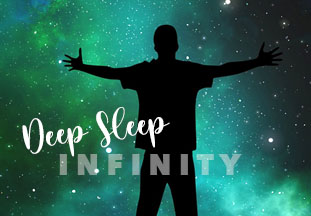
Deep Sleep Infinity
Infinity is a highly atmospheric piece of sleep music, crafted with a simplistic yet rich puretone, with layers that seamlessly weave together to create a deeply relaxing auditory experience.
31 mins

Products
Go deeper
Our Guide to Using Music & Sound to Fall Asleep When You Can’t Sleep and Feel Restless
Why Sound Matters More at Night Than During the Day
If you’re lying awake feeling restless, wired, or unable to drop off, here’s the frustrating truth: sleep doesn’t fail because you’re not tired enough— it fails because your nervous system hasn’t stood down.
At night, when visual stimulation drops away and the body is still, the brain fills the gap. Thoughts get louder. Sensations get sharper. Time stretches. Sound becomes disproportionately powerful.
Music and sound work for sleep because they reduce night-time vigilance, signal predictability, and gently escort the brain away from monitoring mode. Unlike willpower, sound doesn’t argue with you. It bypasses effort.
This guide shows you how to use music and sound strategically — not as background noise, but as a nervous-system tool — to help your body remember how to fall asleep
Understanding Night-Time Restlessness
“I’m Exhausted but Awake” Is Very Common
Sleep is governed by two interacting systems:
Sleep pressure (how long you’ve been awake)
Arousal level (how alert or threatened your system feels)
You can have sky-high sleep pressure and still not sleep if arousal stays elevated. Restlessness is often a sign that:
Cortisol hasn’t dropped far enough
The sympathetic nervous system is still active
The brain is scanning for tomorrow’s problems, not tonight’s safety
It’s this mismatch that keeps you either maddeningly on the brink of sleep but not quite there, or crazily awake with no sign of zzzs. This ‘tired but wired’ state is said to affect up to 40% of adults.
The Brain at Night: Why Thoughts Spiral
When external input drops, the brain:
Switches from task-processing to meaning-making
Revisits unresolved material
Over-indexes on anticipation and memory
In evolutionary terms, night was when threats were hardest to detect. The modern brain hasn’t caught up with duvets and deadlines.
Sound gives the brain something predictable to orient toward, reducing the need to generate stimulation internally.
What Sleep-Supportive Sound Needs to Do
For sound to help with sleep, it must do three things:
Lower physiological arousal (heart rate, breath rate)
Reduce novelty (nothing surprising, catchy, or emotionally charged)
Provide continuity (a sense that nothing is about to happen)
Many people accidentally choose music that does the opposite.
Why Some Music Keeps You Awake
Not all “calm” music is sleep-friendly. Avoid:
Lyrics (language activates meaning-making)
Strong emotional crescendos
Complex or shifting rhythms
Music tied to personal memories or identity
If you find yourself listening to the music rather than drifting with it, it’s too stimulating for sleep.
Tempo, Rhythm, and the Sleeping Body
Tempo Matters More Than Genre (Again, and even more at night)
For sleep onset, the sweet spot is typically:
40–60 BPM, or
Music without a discernible beat at all
Why? Because the autonomic nervous system entrains downward. Faster tempos, even if “soft,” can keep the body hovering just above sleep threshold.
Predictability Is the Hidden Variable
The brain relaxes when it can predict what comes next. Repetition isn’t boring at night — it’s reassuring.
This is why:
Familiar playlists work better than new discoveries
Long loops outperform short tracks
People fall asleep to the same audiobook chapter for weeks
Sleep loves déjà vu.
Sound Types That Actually Help with Sleep
1. Ambient & Drone Music
Long-form, slowly evolving textures
Minimal melody, no rhythmic hooks
Excellent for racing minds
Best for: mental restlessness, rumination, light insomnia
2. Brown & Pink Noise
Deeper, warmer than white noise
Masks environmental interruptions without sharp edges
Best for: sensory sensitivity, urban noise, hyper-alert sleepers (White noise can be too harsh for many adults.)
3. Slow Instrumental Music
Piano, strings, or soft synths
Very slow tempo, limited dynamic range
Best for: emotional settling before sleep rather than during wake-ups
4. Spoken Word (Done Right)
Familiar voices
Neutral or gently descriptive content
No plot tension
Best for: people whose minds need “holding” rather than quiet
Targeted Sound Frequencies for Sleep and Deep Rest
Brainwave Etrainment (With Clear Caveats)
Some sound-based approaches aim to nudge brain activity toward sleep-associated frequencies. Evidence varies, but many people find them subjectively helpful.
Theta to Delta Sleep Magic music (see music listing)
You may wish to try out Theta to Delta Sleep Magic music, which takes a more active 'theta' braing and over the course of 10 minutes aims to move your natural brain state towards 'delta' waves for sleep.
How to use the sleep magic audio
The journey begins with a calming soundscape leading into a soft theta wave pulse. At exactly 5 minutes in, you’ll hear a bell, your signal that the music is beginning its subtle transition. Over the next five minutes, the track slowly moves from theta into delta frequencies, which are linked to deep, restorative, dreamless sleep. By the 10-minute mark, you’ll be fully immersed in delta waves, supported by spacious, ambient textures and elegant musical decorations and choir..
If you're interested in this approach, and want to dive a little deeper, there is an audio course accompanying this music, which you can find at my store. 🙏 https://getmishi.store/l/from-active-mind-to-sleep-in-10-minutes
Common sleep ranges:
Theta (4–8 Hz): light sleep, hypnagogic states
Delta (0.5–4 Hz): deep sleep
Isochronic Tones
Pulsed tones without headphones
More noticeable than binaural beats
Some find these grounding; others find them intrusive. Use cautiously at night.
How to Use Sound Across the Night
Before Sleep: Downshifting
Start sound 20–40 minutes before bed
Pair with low light and reduced decision-making
Keep volume low — sound should recede, not dominate
At Sleep Onset
Use long tracks (30–90 minutes)
Avoid track endings that create silence or surprise
Set playback to fade, not stop abruptly
Middle-of-the-Night Waking
Restart the same sound
Do not introduce novelty
Avoid checking the time
Your goal is containment, not sedation.
Volume, Equipment, and Practicalities
Low volume always wins
Speakers often feel safer than headphones for sleep
If using headphones, choose flat, sleep-specific designs
Sound should feel like a background presence, not a performance.
What to Expect (And What Not To)
Music and sound:
Reduce sleep latency over time
Improve subjective sleep quality
Lower night-time anxiety
They do not:
Guarantee immediate sleep
Override major hormonal or medical issues
Replace treatment for chronic insomnia
Resting calmly is still progress. The nervous system learns by repetition, not force.
The Most Common Mistake
Trying to use sound to make sleep happen.
The paradox: the harder you aim for sleep, the more alert the system becomes. Sound works best when used to invite rest, not demand unconsciousness.
Sleep is a side-effect of safety.
A Final Reframe Worth Keeping
If you can’t sleep, you are not failing at sleep.
You are simply awake in a system that hasn’t yet felt safe enough to let go. Sound is one of the most ancient ways humans have signalled safety to one another — fires crackling, waves repeating, voices droning gently into the dark.
You’re not doing something new. You’re remembering something old.
Explore more emotions
Resources and references
Some of the content on this page is informed by the sources listed below. Mishi has no partnership or connection with these resources, which are presented here for information only and not as any kind of medical recommendation. If you find any links inappropriate or broken, please contact me. Thank you. 🙏